







From 6kW to 12kW and Beyond: How the European Laser Cutting Market Is Changing


-
Hymson Laser
-
News
-
Corporate News
Industrial technology rarely changes overnight.
More often, transformation happens quietly: machines become faster, lasers become more powerful, automation improves, and customer expectations gradually move to a new level.Then one day, what was once considered “high-end” becomes the new standard.That is exactly what is happening in the European laser cutting market.
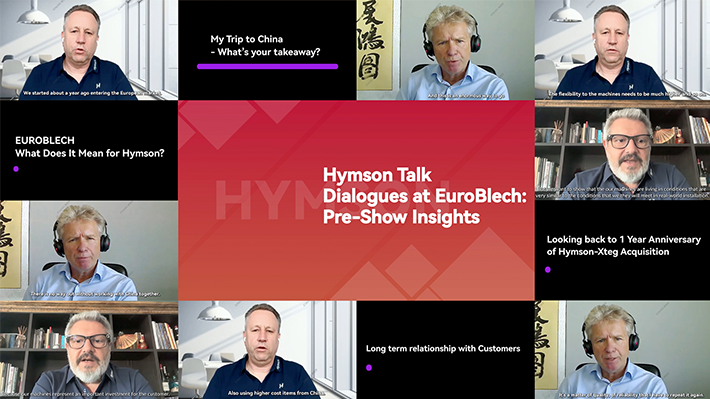
In my recent conversation with Hymson’s Headquarters branding team, we discussed how laser technology has evolved, what European customers are asking for today, and why the next few years could create significant opportunities for Hymson and Xtech.
12kW is becoming the new mainstream
Not long ago, a 6kW fiber laser cutting machine represented serious industrial capability.Today, the market is moving quickly.According to Harald's observations from the German market, 12kW systems are increasingly replacing 6kW machines as a mainstream choice.
The reason is straightforward.
More power can mean higher cutting speeds, greater productivity and the ability to process thicker materials efficiently.For manufacturers replacing older equipment, the calculation is therefore changing.They are not simply replacing an old 6kW machine with another 6kW machine.
They are asking:
What level of productivity should the next generation of equipment deliver?
That creates a significant replacement opportunity.
Why not simply move to 20kW or 30kW?
Laser technology can already go much further.Machines with 20kW, 30kW and even higher laser power are available.But technological capability and market practicality are not always the same thing.
In Europe, very high-power machines can encounter practical constraints, including the electrical infrastructure available at customer sites.For many manufacturers, 12kW therefore represents an attractive balance between significantly higher productivity and practical factory requirements.
This is precisely the type of market transition where new competitors can gain ground.When customers are already reconsidering what kind of machine they need, they may also become more willing to reconsider who should supply it.
The bigger shift: China's industrial technology is changing
There is another transformation happening at the same time.European companies increasingly recognize that cooperation with China is becoming part of the competitive landscape across industries — from automotive and chemicals to sheet-metal processing.Chinese manufacturing technology has developed at remarkable speed.
The old model was relatively simple:
Europe = premium technology
China = lower price
That distinction is becoming much less useful.Chinese manufacturers are moving rapidly toward higher performance, better quality and more sophisticated automation while maintaining strong cost competitiveness.The result is a much more interesting question: What happens when Chinese engineering speed and manufacturing scale are combined with European application knowledge, quality expectations and local service?
That is the opportunity we see in the cooperation between Hymson and Xtech.
Local knowledge changes the product
Localization should not happen only after the machine arrives in Europe.European customer requirements need to influence the machine while it is still being developed.German customers may have different expectations around automation, machine configuration, reliability, serviceability, documentation and component selection.
The local European team therefore plays an important role in communicating those requirements directly to Hymson's engineering and manufacturing teams in China.
This creates a feedback loop:
European customer requirements → local Xtech team → Hymson engineering → product improvement → European customer feedback
When that loop works quickly, localization becomes more than sales support.It becomes part of R&D.The next battleground is not only hardware. The laser cutting machine itself is only one part of the future.Customers increasingly expect automation around the machine, smarter programming, easier operation and greater integration with the entire production environment.
Artificial intelligence will also play a growing role in programming, process optimization and manufacturing automation.This means competition in the next generation of sheet-metal processing will increasingly involve an entire ecosystem:
Laser technology + automation + software + AI + service.
That changes what it means to be a machine-tool company.
The winners will not simply manufacture powerful lasers.
They will help customers operate more productive factories.
Post 1: Looking back to 1 Year Anniversary of Hymson-Xteg Acquisition
13:03-15:00(1min 57secs)
Since Hymson and Xtech joined forces in October 2025, our teams in China and Germany have been working closely to improve the technology, quality, and reliability of our high-power laser cutting machines for the German market.The first upgraded machines were delivered in April 2026.But before they even arrived, three machines had already been sold.The customers hadn't seen the finished machines in Germany yet. They made their decision based on the reputation Xtech had built over many years — and their confidence that together, Xtech and Hymson would deliver what we promised.
The first three machines were more than three orders.They were three customers saying:“We trust you to deliver.”Now our job is to earn that trust again — with every machine we deliver.
Post 2: Lessons learnt how we win deals
15:30-16:49(1min 19 secs)
Quality is not a department. It’s a company-wide mindset.
To stay ahead, having advanced technology is not enough. The technology has to be reliable, and everyone — from manufacturing and engineering to sales and service — needs to take responsibility for quality.
This is also where the partnership between Hymson and Xtech creates real value:
Hymson brings a strong commitment to technology, manufacturing, and continuous quality improvement.Xtech brings decades of market experience, customer relationships, and a reputation built over many years in Germany.
Post 3: How we compete with European Giants
17:44-19:16(1min 32 secs)
European competitive landscape is tough.Trumpf holds around 60–70% of the relevant German market, and its headquarters is only about 80 kilometers from Xtech.So how do you compete in the home market of one of the world's strongest machine-tool brands?
For German manufacturers, the real question is not simply how much a machine costs to buy.It's more about how reliably does it run, how much uptime can it deliver, how quickly can a problem be solved, and ultimately, how much money can this machine help the customer make?
We have to demonstrate that our machines can deliver the quality, reliability, and uptime expected by demanding German manufacturers.
Post 4: Change the mind of European customers about Chinese machinery
20:22-23:00(2mins 38secs)
“Made in China” should not automatically mean “lower quality.”
But changing that perception in the German market takes more than words.
Hymson machines are already being used across a large and demanding manufacturing market in China. That installed-base experience gives us valuable real-world feedback to continuously improve machine performance, reliability, and quality.
At the same time, building a machine for the German market means understanding what German customers expect.That includes not only the machine design itself, but also the components behind it. Using established technology and components from companies such as Siemens and Precitec can give customers greater confidence in the overall solution.
For Hymson and Xtech, the goal is not simply to convince customers that Chinese machines can compete.It is to give customers enough real-world evidence to make that judgment for themselves.
Post 5: Future trends in Europe
27:03-30:14(3mins 11secs)
For European manufacturing, working with China is becoming less of an option but more of a reality.Whether we look at automotive, chemicals, sheet metal, or industrial machinery, China has become deeply integrated into the global manufacturing ecosystem.
For many years, the conversation around Chinese industrial equipment focused primarily on one advantage: price.Today, that picture is much more complex.Chinese manufacturers are investing heavily in technology, engineering, automation, and product quality. In many applications, the performance gap with established European manufacturers has narrowed significantly — while cost competitiveness remains an important advantage.
That is exactly what we are trying to achieve through the cooperation between Hymson and Xtech.Hymson brings technology development, manufacturing scale, engineering speed, and cost competitiveness.Xtech brings decades of European market experience, application knowledge, customer relationships, and local service capability.This combination enables us to increase our business in Europe.
Post 6: Explaining Look forward to great expectations
31:57-32:58(1mins 01secs)
The calligraphy at my back on the wall is a work from our Chairman Mr.Zhao, it is a sentence meaning Looking forward to great expectations. At EuroBlech 2026, our goal is to bring Hymson to the minds of our customer by One team. One brand. One message to the European market.
Last year in Stuttgart, customers didn't just see machines.They saw Chinese and German colleagues standing together, talking with customers, discussing technology, applications, and service as one team.That combination attracted attention.
This year, we want to take that message one step further at EuroBLECH 2026 in Hannover.Our objective is not simply to exhibit another laser cutting machine.We want customers to leave the exhibition with a much clearer understanding of who Hymson is, what Hymson technology can deliver, and why the combination of Hymson and Xtech creates something different for the European market.
We look forward to continuing that journey together in Hannover.
See you at EuroBLECH 2026.


